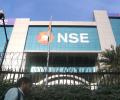
After a sharp fall in the share prices of HDFC Bank and other private sector lenders in the past three days, the BFSI (banking, financial services and insurance) sector weighting in the Nifty50 has slipped to a seven-year low of 32.03 per cent, down from nearly 36.6 per cent at the end of March 2023 and 34.5 per cent at the end of December 2023.

The bull run in the Indian equity markets is intact, said analysts at Morgan Stanley in a recent note. They expect the S&P BSE Sensex to hit 80,000 levels by December 2023 in their bull-case scenario, to which they have assigned a 30 per cent probability. From the current level, this translates into an upside of nearly 29 per cent.
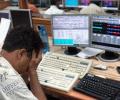
From the Sensex pack, Tata Steel declined 3.45 per cent, followed by Tata Motors which fell by 3.19 per cent. Bajaj Finserv, NTPC, JSW Steel, State Bank of India, Larsen & Toubro and Bharti Airtel were among the other major laggards. Nestle, Asian Paints, Hindustan Unilever and Tech Mahindra were the gainers.
'There is a weak link between the economy and the stock market.'

If you are overweight on fixed-income instruments, go for ELSS, and vice versa.

Most economists expect the global economy to weaken in the coming year amid political and financial volatility, but a large majority of over 90 per cent are confident of moderate or strong growth in South Asia, notably India, a survey showed on Friday. At the same time, the outlook for China has dimmed following signs of deflationary pressures and fragility in the country's real estate market, the World Economic Forum's latest 'Chief Economists Outlook' report said. As the world grapples with political and financial volatility, almost six in 10 believe the global economic outlook will undermine progress towards meeting the UN Sustainable Development Goals (SDGs), with 74 per cent saying geopolitical tensions will have the same effect.
UBS Securities, broking arm of the largest Swiss bank, and Australia's Macquarie Equities Research are the most bearish.
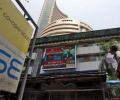
Equity benchmark indices Sensex and Nifty buckled under selling pressure after a nine-session rally on Monday, as massive sell-off in IT, tech and telecom counters unnerved investors.

'We suggest an equity strategy of 5% to 10% exposure to cash, 5% to Gold ETF, close to 50% to Sensex/Nifty/large mid-cap stocks.'

Kotak Bank was the top gainer in the Sensex pack, rallying over 8 per cent, followed by TCS, Infosys, ICICI Bank, HCL Tech and ONGC. On the other hand, Titan, HUL, PowerGrid, NTPC and Nestle India were among the laggards. NSE Nifty advanced 126.60 points, or 1.38 per cent, to settle at 9,313.90.

Benchmark Sensex and Nifty closed at new lifetime high levels on Monday on foreign fund inflows and buying in index majors HDFC Bank and Reliance Industries. The 30-share BSE Sensex jumped 529.03 points or 0.80 per cent to settle at its new all-time closing high of 66,589.93. During the day, it climbed 595.31 points or 0.90 per cent to hit its lifetime intra-day peak of 66,656.20. The NSE Nifty went up by 146.95 points or 0.75 per cent to end at a new record high of 19,711.45.

Shares of public sector enterprises have corrected by up to 22 per cent month-to-date until March 19, 2024. Analysts attribute this steep fall to the valuation exuberance seen after a sharp run in these counters last year and suggest investors remain selective regarding the stocks in this space. "The rally in public sector undertaking (PSU) stocks has been stretched and sharp, although it is somewhat justified by improvements seen in earnings, operations, balance sheets, and overall profitability.

Among the Sensex firms, Nestle rose the most by 4.66 per cent. NTPC rose by 2.16 per cent, Reliance Industries by 1.53 per cent, State Bank of India by 1.04 per cent and Hindustan Unilever by 1.03 per cent. ITC, Power Grid and Bajaj Finance were the major gainers. Wipro, Tata Consultancy Services, HCL Technologies, Tata Steel, Bajaj Finserv and Maruti were among the laggards.

From the Sensex pack, HDFC, HDFC Bank, Mahindra & Mahindra, UltraTech Cement, Tata Steel, Bajaj Finance, State Bank of India, Reliance Industries, Bajaj Finserv and ICICI Bank were the major gainers. Power Grid, Maruti, Tech Mahindra, IndusInd Bank, HCL Technologies and Axis Bank were among the laggards.

Equity benchmark indices Sensex and Nifty stayed on the back foot for the second straight session on Friday as investors offloaded FMCG, IT and teck stocks amid a weak opening in European markets. Selling pressure in index heavyweight Reliance Industries also added to the weak trend in equities. The 30-share BSE Sensex fell 223.01 points or 0.35 per cent to settle at 62,625.63.
Stocks of public sector undertakings (PSUs) have been on fire in the past year as investors cheered an improvement in key operating metrics and embraced counters of these state-owned enterprises, analysts suggest. The S&P BSE PSU Index has gained over 90 per cent in the past year, rising much higher than the S&P BSE Sensex, which has rose nearly 19 per cent during this period, according to ACE Equity data. The BSE PSU Index, reports show, has delivered a compound annual growth rate (CAGR) of 28 per cent (including dividends reinvestments) over five years and risen by almost 60 per cent in the past year.

Among the Sensex firms, Axis Bank, Power Grid, Maruti, State Bank of India, Tata Motors, ITC, Nestle and Mahindra & Mahindra were the major gainers. Bajaj Finance and Larsen & Toubro were the laggards.

This is the Mukesh Ambani-led company's second entry into the dairy segment and it will directly compete with Amul and Mother Dairy.
Equity benchmark indices Sensex and Nifty on Friday reversed their six-session losing streak and rebounded more than 1 per cent on value buying in auto, IT, financial and energy stocks. Better than expected quarterly financial results of corporates also boosted investor sentiments even as uncertainties persisted over the escalating tensions in the Middle East, according to analysts. In a largely range-bound trade, the 30-share BSE Sensex rose 634.65 points or 1.01 per cent to settle at 63,782.80 points.

Equity markets rallied after softer-than-expected inflation data in the US and UK rekindled hopes of the end of the rate-hiking cycle by major central banks. The soft inflation reading drove down bond yields and the US dollar, whetting the appetite for risky assets. The 10-year US bond yield fell below 4.5 per cent after topping 5 per cent less than a month ago.

'For the next two years, we expect the bulk of earnings growth contribution from sectors like financials and energy, where the outlook remains positive, while the sectors which are linked to domestic consumption and are currently witnessing strains on margins have low salience for Nifty earnings.'
Benchmark indices Sensex and Nifty ended with gains on Wednesday, extending the previous day rally amid lower level of inflation on domestic front and better-than-expected inflation readings from the US. The 30-share BSE Sensex climbed 144.61 points or 0.23 per cent to settle at 62,677.91. During the day, it jumped 301.81 points or 0.48 per cent to 62,835.11.
From the Sensex firms, Bajaj Finance, Bajaj Finserv, Infosys, Bharti Airtel, Kotak Mahindra Bank, Larsen & Toubro, Mahindra & Mahindra, ITC, Tech Mahindra, Tata Steel, Tata Motors, Titan, Reliance Industries and Nestle were the major winners. Hindustan Unilever, Power Grid, Axis Bank, Tata Consultancy Services, State Bank of India, Asian Paints and Wipro were the laggards.
From the Sensex pack, NTPC, Tata Motors, Larsen & Toubro, Bajaj Finserv, Bharti Airtel, HDFC Bank, Reliance Industries, Titan, Power Grid and State Bank of India were the major gainers. ITC, UltraTech Cement, Tech Mahindra, Tata Steel, Wipro, Tata Consultancy Services and JSW Steel were among the laggards.

Macroeconomic data announcements, global trends and trading activity of foreign investors would guide momentum in the equity market this week, analysts said. Markets ended a five-week losing streak and gained nearly a per cent last week, helped by a sharp rebound on Friday. Last week, the BSE benchmark jumped 500.65 points or 0.77 per cent and the Nifty gained 169.5 points or 0.87 per cent.

While three of the top five FPIs - Capital, Government of Singapore, and Vanguard - have seen their investment value more than triple, India's benchmark indices have risen just 70%.
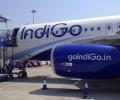
Shares of low-cost airline IndiGo hit record high on the bourses soon after reports of pilot crisis at Vistara emerged. The development also saw airfares surge by around 25 per cent on select routes. Shares of IndiGo hit a lifetime high of ~3,68.5 on April 2, 2024, and has gained 2.4 per cent on the bourses in April.

The sharp rally in the markets thus far in fiscal 2023-24 (FY24) has left analysts struggling to find investment-worthy themes. The S&P BSE Sensex has surged nearly 7 per cent thus far in FY24 and hit a fresh 52-week high of 63,601.71 levels on June 22, mostly led by foreign institutional (FII) flows. "The Indian market has seen a broad rally in the past few months but headline indices have seen more modest performance. "We are not very clear about the reasons for the rally and the divergent performance and struggle to find ideas in the consumption, investment and outsourcing sectors after the sharp run-up in several of our favored sectors and stocks in the past two months," wrote Sanjeev Prasad, co-head, Kotak Institutional Equities, in a recent co-authored note with Anindya Bhowmik and Sunita Baldawa.

From the Sensex pack, ICICI Bank, State Bank of India, Larsen & Toubro, Maruti, Tata Steel, Kotak Mahindra Bank, Bajaj Finance, Nestle, Power Grid and HDFC Bank were the major gainers. Jio Financial Services, Bharti Airtel, Tata Motors, Tech Mahindra, ITC, UltraTech Cement and Mahindra & Mahindra were among the laggards.

India will need $223 billion of investment to meet its goal of wind and solar capacity installations by 2030, according to a new report by research company BloombergNEF (BNEF). The government has set a target of increasing non-fossil power capacity to 500 GW by 2030. It wants non-fossil fuel power sources to provide half of its electricity supply by 2030. "To achieve this target, India needs to massively scale up funding for renewables," the report said, adding that $223 billion is required over the next eight years just to meet the solar and wind capacity targets.

Stock markets will be largely driven by global trends and macroeconomic data announcements in a holiday-shortened week which may see volatility amid monthly derivatives expiry, say analysts. Equity markets will remain closed on Monday for Gurunanak Jayanti. Trading activity of foreign investors and the movement of the rupee against the dollar will also be tracked by investors.

From the Sensex pack, State Bank of India, ICICI Bank, IndusInd Bank, Axis Bank, Kotak Mahindra Bank, HDFC Bank, Reliance Industries were among the major laggards. Bucking the trend, auto stocks Tata Motors and Mahindra & Mahindra closed with gains.

From the Sensex pack, Infosys tanked over 8 per cent after the company reported a lower-than-expected 11 per cent rise in net profit for the June quarter and delivered a shocker as it slashed its FY24 growth outlook to 1-3.5 per cent on delayed decision-making by clients amid global macro uncertainties. Hindustan Unilever, HCL Technologies, Wipro, and Tech Mahindra were the other major laggards. On the other hand, Larsen & Toubro rose the most by 3.88 per cent after it bagged an order of worth over Rs 7,000 crore from the bullet train project.

UltraTech Cement was the biggest gainer in the Sensex chart, climbing 3.13 per cent, followed by Kotak Mahindra Bank, Tata Motors, Axis Bank, Maruti, Bajaj Finserv, Bajaj Finance and Mahindra & Mahindra. In contrast, Infosys, Tech Mahindra, Tata Consultancy Services, Wipro, Bharti Airtel, HCL Technologies, ICICI Bank and Nestle were among the laggards.

Benchmark BSE Sensex closed above the historic 66,000-mark for the first time while NSE Nifty hit a new all-time closing high driven by heavy buying in IT counters and fresh foreign fund inflows. Optimism in global equity markets also helped the local markets maintain their winning momentum for a second day. The 30-share BSE Sensex jumped 502.01 points or 0.77 per cent to settle at its new all-time closing high of 66,060.90.

'Earlier-than-expected tapering from the US, followed by rate hikes, and locally, a potential third wave, which mimics the second wave in terms of severity.'

Bajaj Finance was the top laggard in the Sensex pack, tanking up to 8 per cent, followed by M&M, Tata Steel, Bajaj Auto, ONGC, HDFC Bank and Kotak Bank. On the other hand, TCS, Tech Mahindra, HUL, Axis Bank and ITC were the top gainers.

Portfolio returns, say analysts at Morgan Stanley, are more likely to be driven by bottom-up stock-picking rather than top-down macro forces.

Equity benchmark indices ended flat on Wednesday with Sensex sliding 33 points and Nifty gaining 9 points after an unabated record-breaking rally in the last few trading sessions. Weak global market trends and fall in HDFC twins also spoiled markets party. The 30-share BSE Sensex dipped 33.01 points or 0.05 per cent to settle at 65,446.04.

Major laggards among Sensex constituents included Bharti Airtel, Hindustan Unilever, Tata Steel and ITC. Power Grid, UltraTech Cement, NTPC and Titan emerged as winners.
 © 2026 Rediff.com - Advertise with us - Disclaimer - Privacy Policy - Sitemap - Feedback - About us - Terms of use - Grievances